
Maine Lobster Marketing Collaborative Site Design
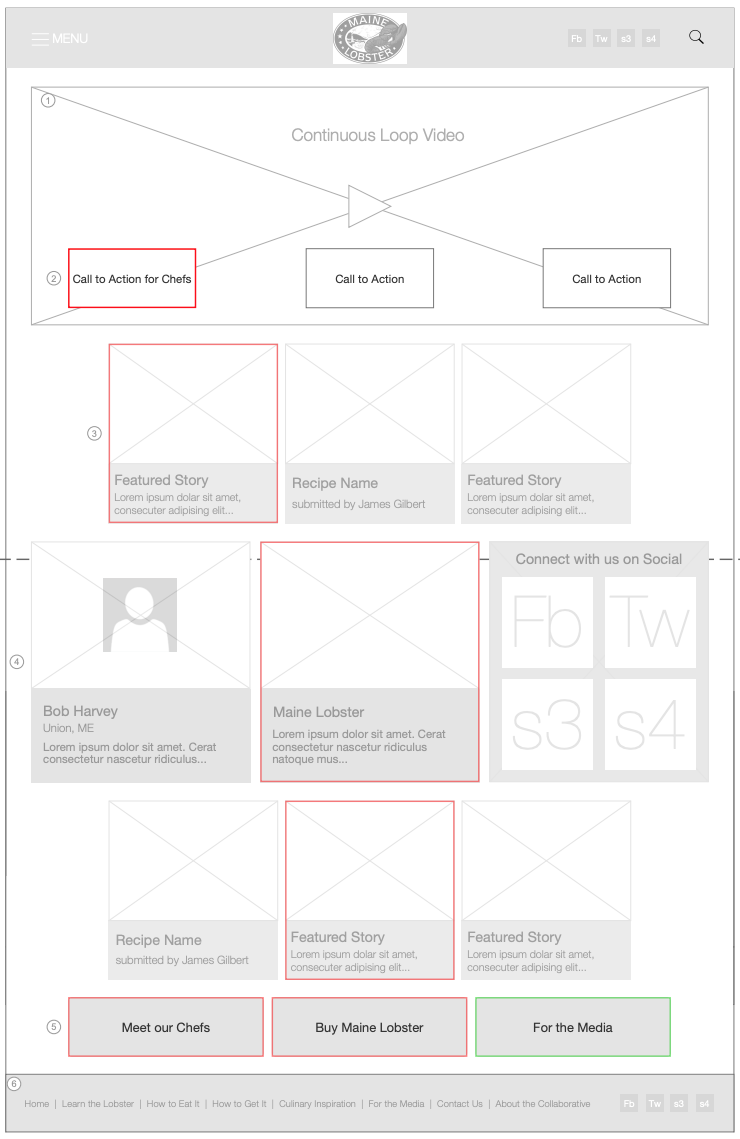
Click on the image to access the full wireframes pdf.
The Maine Lobster Marketing Collaborative needed a site that could tell their story, educate consumers, and serve multiple distinct audiences — all without becoming a content management nightmare for the team maintaining it. This project used stakeholder alignment, templated architecture, and interchangeable modules to deliver something that could grow with the organization without requiring a rebuild every time the business direction shifted.
The Problem Many internal and external stakeholders with differing perspectives needed to be aligned on a shared set of goals before any design work could begin. The primary business goal — segmenting the site by audience rather than by content type — ran against the way most backend systems are naturally built. Understanding that tension early and designing around it was the difference between a site that worked and one that would eventually be shoehorned into an unworkable structure.
How I Approached It Stakeholder alignment came first. Reiterating each stakeholder's needs back to them in terms of their primary goals — and showing how satisfying those goals would affect secondary goals, page layouts, and site functionality — got everyone on the same page before a wireframe was drawn.
The content architecture was designed around audience segments, not content types. A templated approach with interchangeable modules and calls to action gave the Collaborative flexibility to shift emphasis based on evolving business goals without requiring structural changes to the site.
Outcome A site architecture that segments by audience, uses reusable modules for content flexibility, and is designed to grow. Wireframes and a sitemap documented the full approach and served as the primary development reference.